 Construction companyDmitry Evtushenko
RU · EN · DE
Get an estimate
Construction companyDmitry Evtushenko
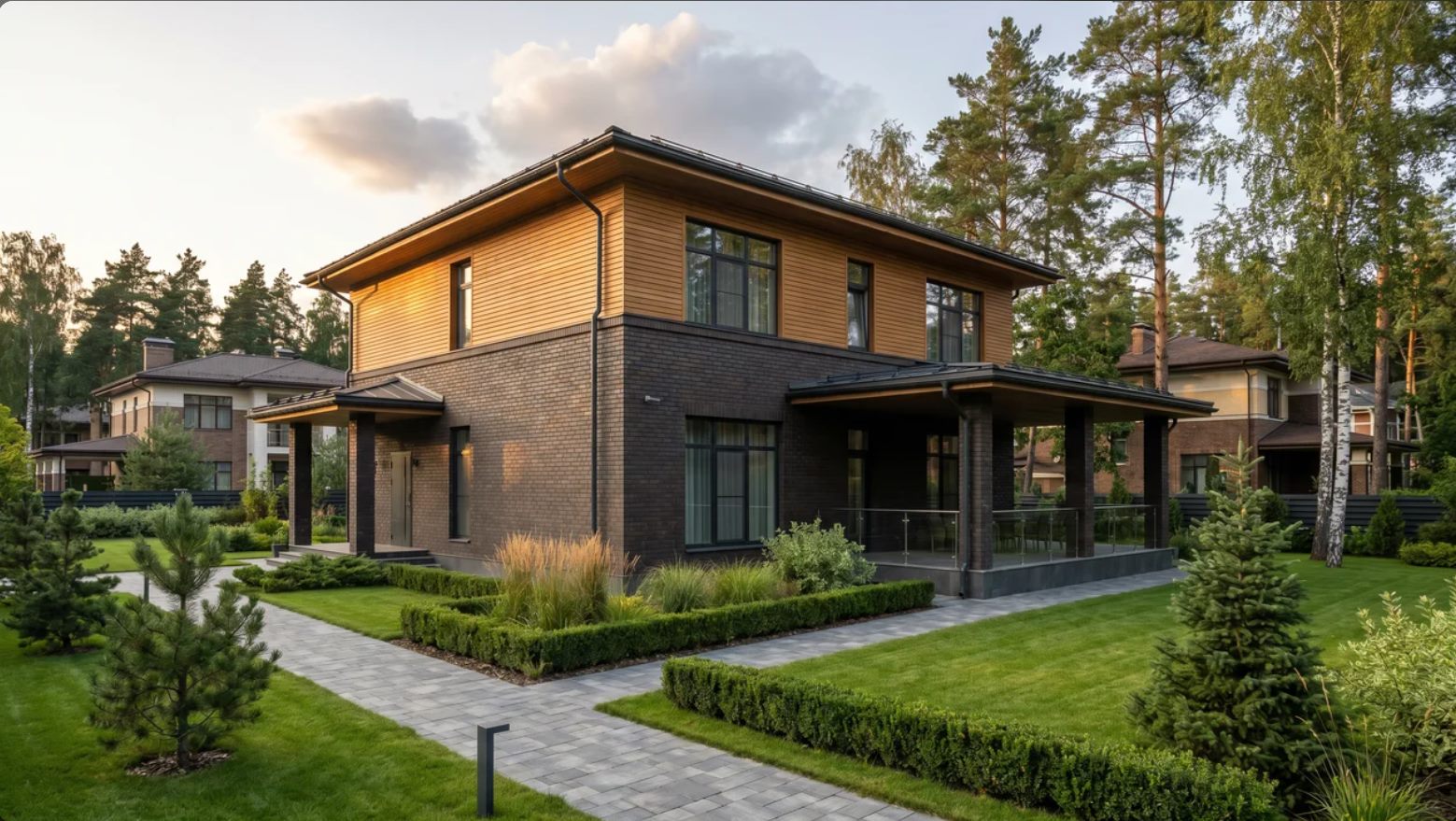
Porous fired ceramics on a monolithic frame: a warm, strong and long-lasting home with a comfortable indoor climate. A natural material — fired clay, with no chemistry in the wall.
Honestly: ceramic block is neither “the best” nor “the worst”. It is strong at the job it was made for. Here’s when it’s your option — and when I’ll suggest something else.
A warm home to live in all year round, with the comfortable indoor climate only ceramics give you.
A wall of fired clay — no chemistry, strong and durable, built to stand for generations.
Render, clinker, a ventilated façade — ceramic block takes them all.
I turn to ceramic block when what’s wanted is a “breathing” home that lasts. It is premium ceramics and dearer than aerated concrete. If budget is the priority, I’ll honestly recommend aerated concrete.
With ceramics, the house is made by the monolithic frame, careful masonry and handling moisture properly. This is where corners get cut most often — and where I don’t economise.
A level base and a damp-proof course beneath the first course: the ceramics must not draw moisture up from the foundation.
The load is carried by a monolithic reinforced-concrete frame, with the ceramic block as warm infill. The home stands solid and doesn’t depend on the strength of the block itself.
Ground blocks and a warm or thin joint remove the cold bridges. Porous ceramics are warm in themselves — the wall holds its heat.
Ceramic block is vapour-permeable — it “breathes”. I choose the finish so that vapour escapes outwards rather than being trapped in the wall. I calculate the dew point for your wall build-up.
The thing almost nobody shows you. Here is the wall build-up from the inside out — every layer with a job to do. Once you can see the cross-section, you understand what you’re paying for and why the home will be warm.
The exact build-up is tailored to your design and budget. This is the standard solution for a year-round home.
Every material has its limits. Hiding them means letting you down later. Here’s how it is.
A table almost nobody publishes. Compare them side by side and decide on the facts rather than the advertising.
| Material | Warmth | Price | Speed | Shrinkage | Service life |
|---|---|---|---|---|---|
| Ceramic block | high | medium+ | moderate | none | 100–150 years |
| Aerated concrete | high | medium | fast | none | 80+ years |
| Brick | medium | high | slow | none | 100+ years |
| Glued laminated timber | high | high | fast | 1.5–2% | 70+ years |
These ratings are indicative, for a quick comparison. Exact figures are worked out for your particular design.
Not a single “from” figure, but stage by stage — so you can see what you’re paying for. That way you know where you can save and where you can’t.
Get a price for my homeThe ₽/m² rate depends on floor area, number of storeys and whether there’s a basement — and it falls as the home gets bigger. The exact figure for your home is in the calculator; the final estimate comes after a site visit.
Tell me about the plot and how many rooms you need, and I’ll work out a ballpark estimate and timeline. You’re writing to me personally, and I answer myself. The site visit is free.